At Pure Therapy, Barefoot Bodywork is a healing art. It is not about applying the most pressure. It’s about using broad, slow, intelligent touch to help the body release what it has been carrying—so movement feels easier, tension feels less consuming, and deep work can still feel incredibly relaxing.
What Is Barefoot Bodywork?
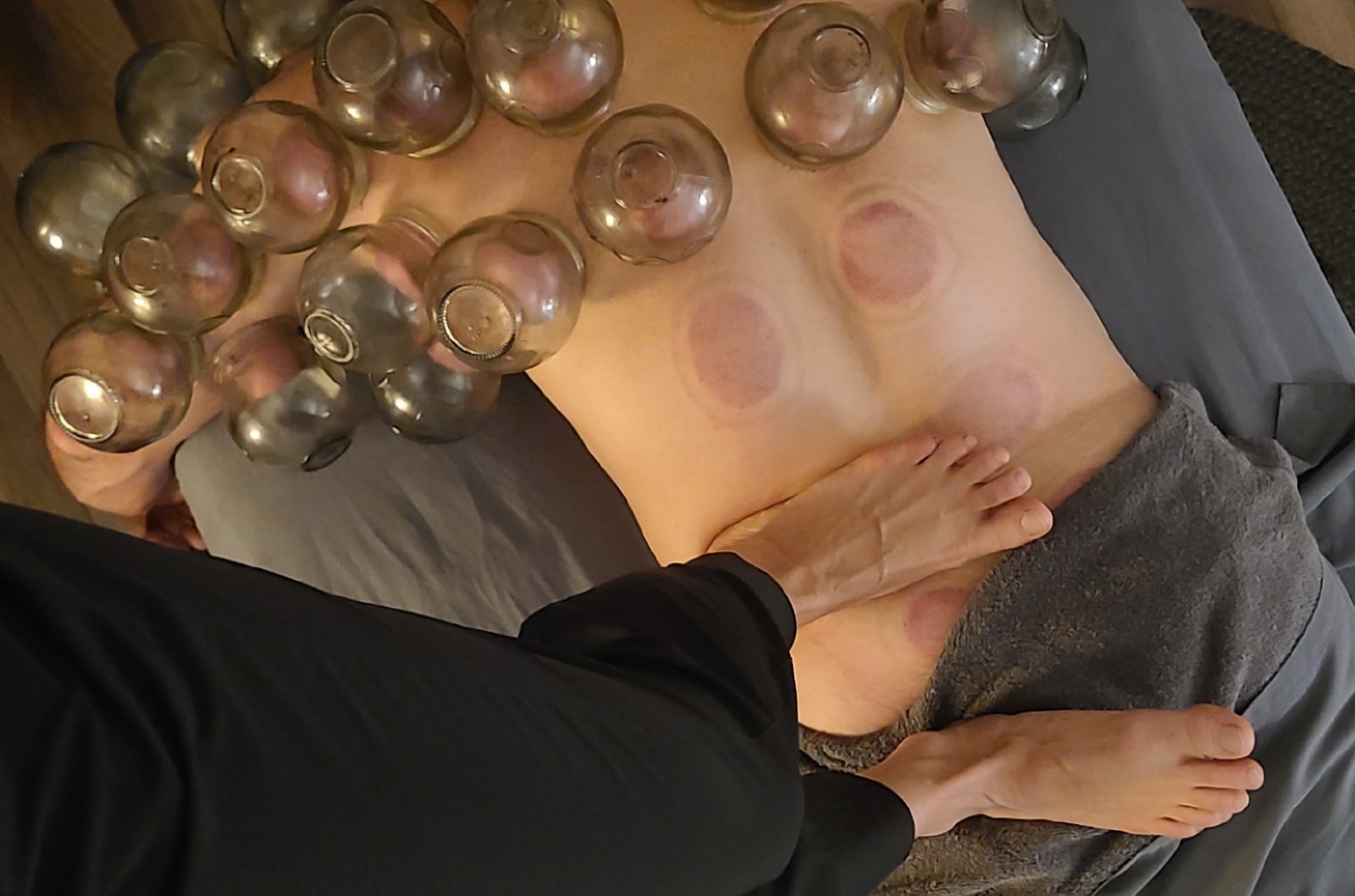
Barefoot bodywork, also known as Ashiatsu, is a specialized form of therapeutic massage in which the practitioner uses their feet to deliver broad, slow, and precisely controlled pressure.
It may sound unexpected at first, but Ashiatsu is not someone simply walking on your back. It is a highly skilled, intentional form of bodywork that uses balance, body mechanics, and trained sensitivity to create a deeply restorative experience. At Pure Therapy, barefoot bodywork is often paired with cupping and fascia-focused massage to help the body soften, move, and reset.
Why Feet Create a Different Kind of Pressure
Hands, thumbs, and elbows can be wonderfully precise, but deeper massage with smaller contact points can sometimes feel sharp or overly intense. The foot offers a broad, stable surface that distributes pressure over a larger area.
This allows the therapist to offer meaningful depth without the pointed sensation that some people associate with deep-tissue massage. The pressure is slow, steady, and adaptable—not forceful. Your practitioner maintains control and adjusts the depth, pace, and placement throughout the session according to your comfort and response.
The result is often described as deep, flowing, grounding, and remarkably relaxing.
Working With the Body, Not Against It
Barefoot massage is especially well suited to broad areas of the body that often carry chronic tension: the back, shoulders, hips, glutes, legs, and feet. Long, unhurried strokes and sustained compression can help encourage muscles and surrounding connective tissue to soften over time.
Rather than chasing one “knot,” Barefoot Bodywork allows the practitioner to work across larger lines of tension. This whole-body approach can be particularly supportive for people who feel dense, compressed, stiff, overworked, or as though traditional massage never quite reaches the deeper layers comfortably.
What It Can Feel Like
Your Barefoot Bodywork session may feel very different from traditional massage. Many clients notice:
- Broad, even pressure rather than pointed elbow or thumb work
- Slow, flowing strokes that span larger areas of the body
- Deep muscular contact without a rushed or aggressive feeling
- A gradual softening through the back, hips, glutes, and legs
- Greater ease with movement and a deeply grounded sense of relaxation afterward
The goal is never to make you tolerate pain. More pressure is not always better. The most effective work happens when the body can remain receptive rather than bracing against intensity.
How It Fits With Cupping
When included in Cupping & Bodywork, cupping may be used first to gently lift and mobilize the superficial tissue. This can prepare the area for the broad, sustained contact of barefoot bodywork.
Together, these techniques allow for a full-spectrum approach: cupping creates space and mobility at the surface, while barefoot technique offers deeper, slower pressure through the muscles and fascial layers below. The session may also include hands-on massage, stretching, or lymphatic-inspired techniques depending on what your body needs that day.
Is Barefoot Bodywork Right for You?
Barefoot Bodywork can be an excellent option if you enjoy deeper pressure but do not enjoy sharp, poking, or overly intense massage. It may be especially appealing for persistent tightness, postural strain, limited mobility, physically demanding routines, athletic recovery, and stress-related muscular holding.
Because Barefoot can involve deeper, broader compression, it is not appropriate for everyone. Please tell us before booking if you are pregnant; have osteoporosis, a recent fracture, injury, or surgery; open skin or an active infection; unexplained swelling; a known or suspected blood clot; a bleeding or clotting disorder; uncontrolled high blood pressure; significant kidney or cardiovascular concerns; reduced sensation or neuropathy; implants; or use blood-thinning medication. These are common reasons deep barefoot bodywork may need to be avoided or substantially modified.