
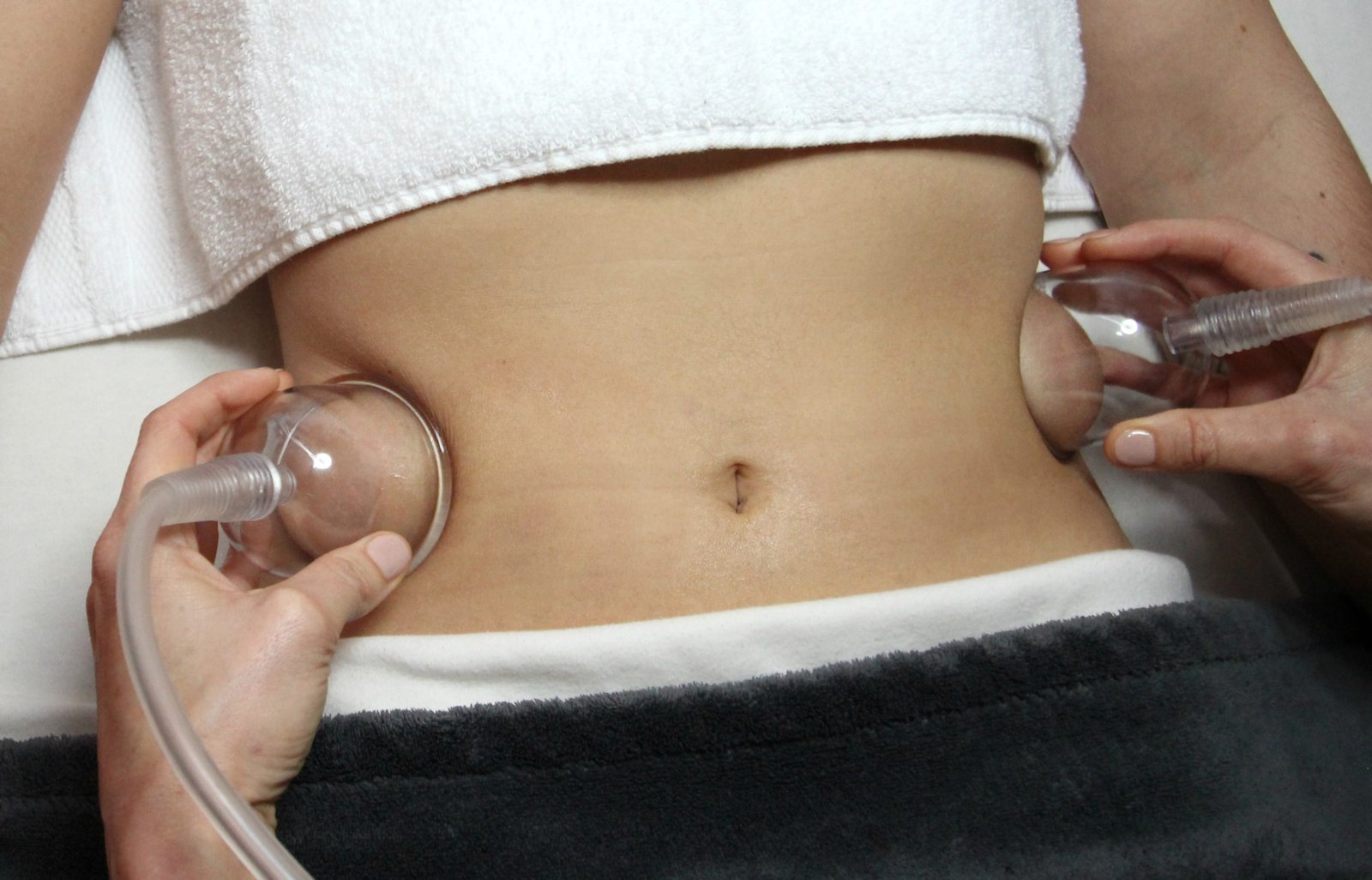
Vacuum lymphatic drainage: The lymphatic system doesn’t work in isolation, and lymphatic care works best when it doesn’t treat it that way. Vacuum lymphatic drainage uses gentle, controlled suction to lift the skin and superficial tissue, encouraging fluid to move toward the lymph nodes. It is often paired with manual lymphatic drainage (MLD), a light, rhythmic skin-stretching technique, so that suction and hands-on work support each other.
Lymphatic Drainage, Approached More Completely
Lymph moves through a network of vessels just beneath the skin. Unlike blood, it has no central pump. It relies on movement, breathing, muscle activity and the pliability of the surrounding tissue. Fascia, muscular tension, circulation and the nervous system all influence how freely that fluid travels.
A whole-body approach looks at those connected structures together. Vacuum work lifts and separates tissue layers so fluid has room to move. Manual techniques then guide that fluid along the body’s natural drainage pathways.
Learn about the lymphatic system
Signs You May Benefit From Lymphatic Drainage
Puffiness or fluid retention
Swelling in the face, hands, abdomen, legs, ankles or feet
A feeling of heaviness or fullness
Rings, shoes or clothing that feel tighter as the day goes on
Bloating or abdominal congestion
Puffiness around the eyes, or sinus and facial pressure
Tissue that feels dense, swollen or less mobile
Post-surgical swelling (see post-op lymphatic drainage)
Lymphedema, lipedema or chronic edema, with guidance from a medical provider
Sometimes the signs are subtle. You may simply feel heavier, more swollen or less like yourself.
When Lymphatic Drainage Is Not Appropriate
Lymphatic drainage should be avoided or postponed with:
A known or suspected blood clot, deep vein thrombosis (DVT), pulmonary embolism or thrombophlebitis
Active infection, cellulitis, fever or acute illness
Uncontrolled heart failure or significant cardiac fluid overload
Pulmonary edema
Severe arterial or ischemic vascular disease
Certain kidney conditions or kidney failure
Open wounds, significant skin damage or acute inflammation
Cancer, pregnancy and diagnosed lymphedema may call for medical clearance or a modified approach. If you have a medical condition, are recovering from a procedure, or aren’t sure lymphatic work is right for you, talk with your healthcare provider first.
This article is for general education.